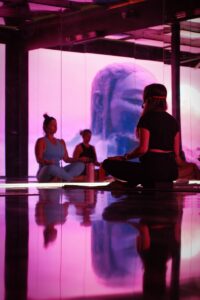
The Power of Meditation

The power of meditation is well known, and yet, many of us struggle to maintain a consistent meditation practice. Meditation is more than a wellness trend, it’s a proven practice that supports mental clarity, emotional balance, and overall well-being. So why do we struggle to incorporate the practice into our daily lives? And how can we create better meditation habits?
What is Meditation?
One of the major reasons most of us don’t meditate regularly is because we don’t know what qualifies as meditation. If you’ve ever tried to sit quietly and chase away your thoughts, you probably know how challenging it can be. After a failed attempt or two, most of us give up. Even though we know about the power of meditation, the practice can feel like a waste of time.
You may be surprised to learn that a consistent meditation practice does not look the same for everyone. Some of us can erase all thoughts or find a state of “flow” while dancing, painting, praying or gardening. On our yogic path we may learn about breath work, candle gazing, guided meditation, chanting, body scanning, visualization, mantras and yoga nidra. If you haven’t yet found a meditation practice that resonates with you, don’t give up, you can benefit from the power of meditation too. Any mindful practice that trains your attention and awareness is meditation. Whether you choose to try mindfulness meditation, breathing exercises, or guided meditation, the goal is the same: to become more present and centered
3 Benefits of Meditation
1. Stress Reduction
In our fast-paced lives, the most common reason we invite the power of meditation into our lives is for stress reduction. Meditation activates the body’s relaxation response, reducing anxiety and calming the nervous system.
By noticing thoughts without getting caught up in them we reduce their anxiety-inducing effect. Redirecting our attention to the present moment breaks the cycle of rumination, reducing our heart rate and slowing down our breath. Creating space to observe our emotions helps us to respond instead of reacting to situations.
In short, meditation reduces stress by calming your body, quieting your mind and training your brain to be less reactive.
2. Better Focus and Mental Clarity
Practices like mindfulness meditation help improve concentration, productivity, and present-moment awareness.
When you practice returning your attention to the present moment, you are training your brain to focus. Over time this will help you to stay focused on a single task, stay focused longer and reduce your mind’s tendency to wander. Our culture demands that we multitask, the power of meditation demands that we resist habitual multitasking and choose a singular focus instead.
The power of meditation improves productivity and concentration by strengthening attention, reducing stress, optimizing brain function and helping you stay present.
3. Emotional Well-Being
Regular meditation enhances emotional resilience, reduces negative thinking, and supports overall mental health. The amygdala is the part of your brain responsible for stress, anxiety and fear. The power of meditation makes the amygdala less active and less sensitive which means fewer stress responses and less emotional outbursts.
Plus, meditation strengthens the prefrontal cortex which regulates emotions, decision making, problem solving and self-control. This helps you respond to emotions instead of being swept away by them.
How to Start a Meditation Practice
Starting small helps build consistency and build a habit you can actually stick to. You don’t need special equipment, a quiet room or even a long attention span. Just a few minutes and a willingness to try is all you need to get started. Sit in a position that makes you feel supported. This can be a chair, couch, the floor or a cushion. Keep your back straight but not rigid.
If you prefer to try a guided meditation first, check out our workshop offerings at Namaste Yoga here. By navigating to the weekend schedule, you can find various workshops on Saturdays and Sundays in the studio.
Tips for Building a Consistent Meditation Practice
Your breath is always with you so focusing on inhales and exhales is always available to you. Your mind will wander, just gently redirect your attention back to your breath when this happens. Allow your thoughts to drift by and notice them without interacting with them.
Try to choose a time that’s easy to stick to. First thing in the morning or right before bed are the most common choice. Setting a timer can help you focus without distraction. Start with 5 minutes and gradually add a few minutes. Some days will feel peaceful and other days will feel chaotic. Both are successful meditations. The secret is consistency, not perfection.
You may want to try a variety of styles, the power of meditation is strong in breath meditation, body scans, guided visualizations, yoga nidra, mantras, and many other styles.
Final Thoughts
Meditation doesn’t require perfection, only presence. By practicing regularly, anyone can cultivate inner peace and clarity. Whether you want stress relief, better focus, or emotional balance, meditation offers a powerful pathway to a healthier, more mindful life.
Download the Namaste Yoga App for access to our online library with guided meditations to help you get started here.